
Most people prepare for a hurricane a week before it hits. They nail boards on the windows, move the furniture inside, fill up the gas tank, and hope for the best.
But the Gulf Coast has a way of teaching harder lessons. One Gulf Coast homeowner watched her house fill with five feet of water during Hurricane Ian, then take on water again during both Helene and Milton. After repairs, she spent around $20,000 on flood gates just to make her home sellable.
That’s the real cost of being unprepared. Not just the cleanup bill, but the years of equity and the home you can’t go back to.
So, how do you prepare your home for a hurricane? This article guides you through every step, from emergency kits to exterior protection. We’ll also discuss how newer homes in Florida are built to improve resilience during high-wind events and protect your house value.
Practical Steps to Prepare Your House for a Hurricane
Here are ways you can prepare your house for a hurricane:
Create a Plan
Make sure you and your family know exactly what to do during an emergency situation. Sit down together and decide where you’ll shelter, how you’ll evacuate, and who to contact if you get separated.
If your home is within 50 miles of a projected landfall, you need to evacuate for a Category 3 or larger storm. Don’t wait to see how it develops. Also, plan on being without power for a week or longer after landfall. Freeze gallon jugs of water so they keep your fridge cold when the power cuts out. Stock a manual can opener, a battery-powered fan, and enough medication refills to cover at least ten days.
Install and Practice Your Shutter System
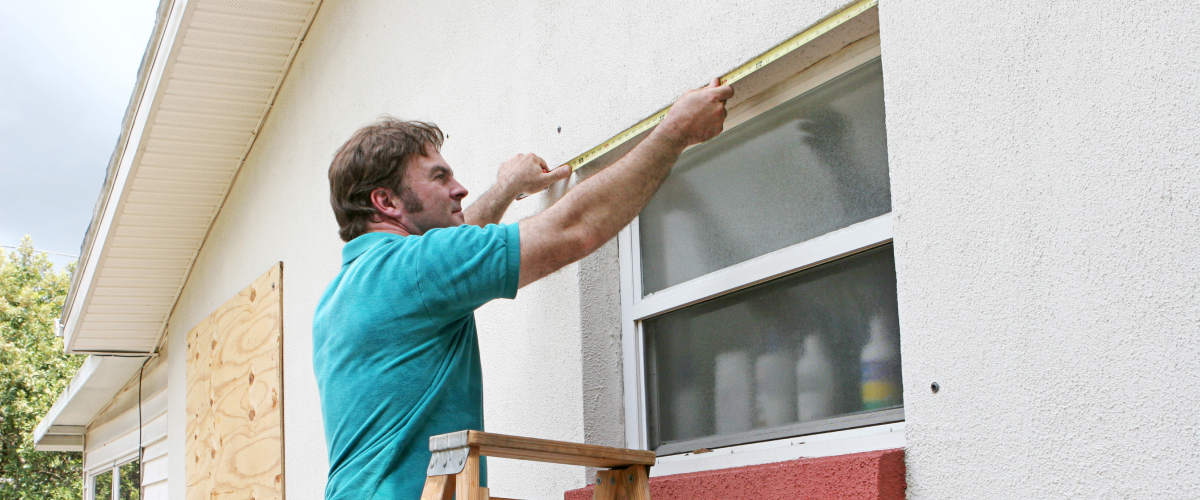
Windows are the most vulnerable part of your home during a hurricane. Flying debris breaks through windows and causes major interior damage. Before storm season starts, locate your shutter materials and the tools you need to install them.
Then do a practice run. Attach the shutter material to at least one window, so you know how it works. The most common mistake homeowners make is not being familiar with the process until they’re rushing to beat incoming winds. By then, it’s too late to figure it out.
Secure Everything Outside
Anything in your yard can become a projectile in hurricane-force winds. Garbage cans, plant baskets and pots, lawn ornaments, patio furniture, and fencing panels should all be moved inside before a storm approaches.
Walk your yard with fresh eyes before each storm season and identify anything that isn’t anchored down. If it can’t go inside, find a way to secure it or get rid of it.
Inspect Your Roof and Exterior
Inspect your roof for loose shingles, compromised flashing, or weak points around vents and skylights.
Also, check your garage door. It’s one of the largest exterior openings on your home and one of the most vulnerable to wind pressure. Make sure it meets the wind code standards to withstand high-wind events.
Check Your Power Supply
Power outages in Northwest Florida can last a week or more after a major storm. Buy a generator so you have a power supply when the grid goes down. Make sure you stock enough fuel to run it for at least 72 hours.
Know which breakers to switch off before a storm hits. Turn off your HVAC system and water heater by pulling their breakers to the off position, so there’s no threat of fire breaking out.
Clean Your Drainage
Clogged gutters and drains turn heavy rain into serious water damage. Clear your gutters, downspouts, and yard drains before a hurricane. Make sure water has a clear path away from your foundation.
Prepare Emergency Kits
Your kit should cover at least three days for everyone in your household. Include water, non-perishable food, medications, a flashlight, batteries, phone chargers, blankets, raincoats, and cash. Pack it and keep it somewhere easy to grab.
If you need to evacuate, you won’t have time to hunt for supplies. Have a travel kit ready to go at the start of every season.
Fill Your Gas Tank
Gas stations run dry quickly when a hurricane approaches. Keep your tank at least half full throughout storm season. If an evacuation order comes, you don’t want to be sitting in a line hoping the pump doesn’t run out before you reach the front.
Protect Your Important Documents
Keep your homeowners’ insurance papers and policy number in a file you can grab quickly on your way out the door. Include a direct phone number to file a claim. When a storm passes, insurance companies get flooded with calls and respond in the order they’re received, so call as soon as you can.
If cell service is out in your area, drive until you find a signal and make the call from there. Waiting for an adjuster to come to you without filing first can mean a much longer delay.
Also, store copies of your ID, mortgage documents, and medical records in the same waterproof file or a secure cloud folder.
Create a Shelter Room
If you’re staying home, choose an interior room on the lowest floor away from windows. A bathroom or closet with no exterior walls works well. Stock it with your emergency kit and make sure you receive weather updates in case of a serious event.
How New Homes Protect You During Hurricane Season
Many homeowners struggle to manage their older homes during hurricane season, as they were built under older building codes. They follow no hurricane standards, have weak foundational structures, and can only withstand force winds of 100 to 120 mph.
According to Florida’s 8th Edition Building Code, homes in Northwest Florida are required to resist wind speeds of up to 140 mph. This is because wind doesn’t just push against the sides of a house during a hurricane. It creates uplift pressure that tries to pull the roof away from the walls. When that connection fails, the rest of the structure may collapse quickly.
Modern construction prevents this through updated building practices.
Here’s how newer homes are designed to withstand hurricanes:
Stricter Foundational Structure
Modern homes use a continuous load path that allows wind forces to travel from the roof down through the walls and into the foundation without breaking the structural chain. Metal connectors, clips, and straps at every joint make sure the entire structure moves and holds as one unit, rather than failing piece by piece.
Protected Openings
The Florida Building Code requires that all glazed openings in wind-borne debris regions be impact-resistant or protected by approved coverings such as hurricane shutters.
Impact-resistant windows are built with multilayered glass and a bonded interlayer that holds shattered pieces in place even after impact. This changes the pressure inside the home, which can cause walls to bow and roofs to separate.
A Built-in Shutter System
Where shutters are used instead of impact glass, they must meet tested performance standards under the current Florida code. Newer homes have a built-in shutter system, so you can grab materials and secure your windows and doors on time.
If you’re spending more time patching up an older home each storm season, buying a new construction home might be more affordable. New homes are easier to maintain, come with lower insurance rates, and are built to withstand major storms.
Henry Company Homes is a family-owned homebuilder delivering affordable, high-quality new construction homes across Northwest Florida for 40 years. We’re committed to quality, durability, and long-term value for every family we serve.
Every home is built to current Florida wind code standards, with a structure secured from foundation to rafters and a shutter system included. You’re prepared every hurricane season.
See how Henry Company Homes builds hurricane-resistant homes. Browse our available communities across Pace and Gulf Breeze, and book a call with us.